Japanese Matcha, Direct From Shizuoka
Smooth umami and a clean finish. For traditional matcha or lattes.
Our ceremonial matcha
- Smooth & naturally sweet
- First harvest · single cultivar
- 100% matcha · nothing added
2026 fresh harvest
A better daily cup starts here.
Made from this spring’s first harvest in Shizuoka, Japan.
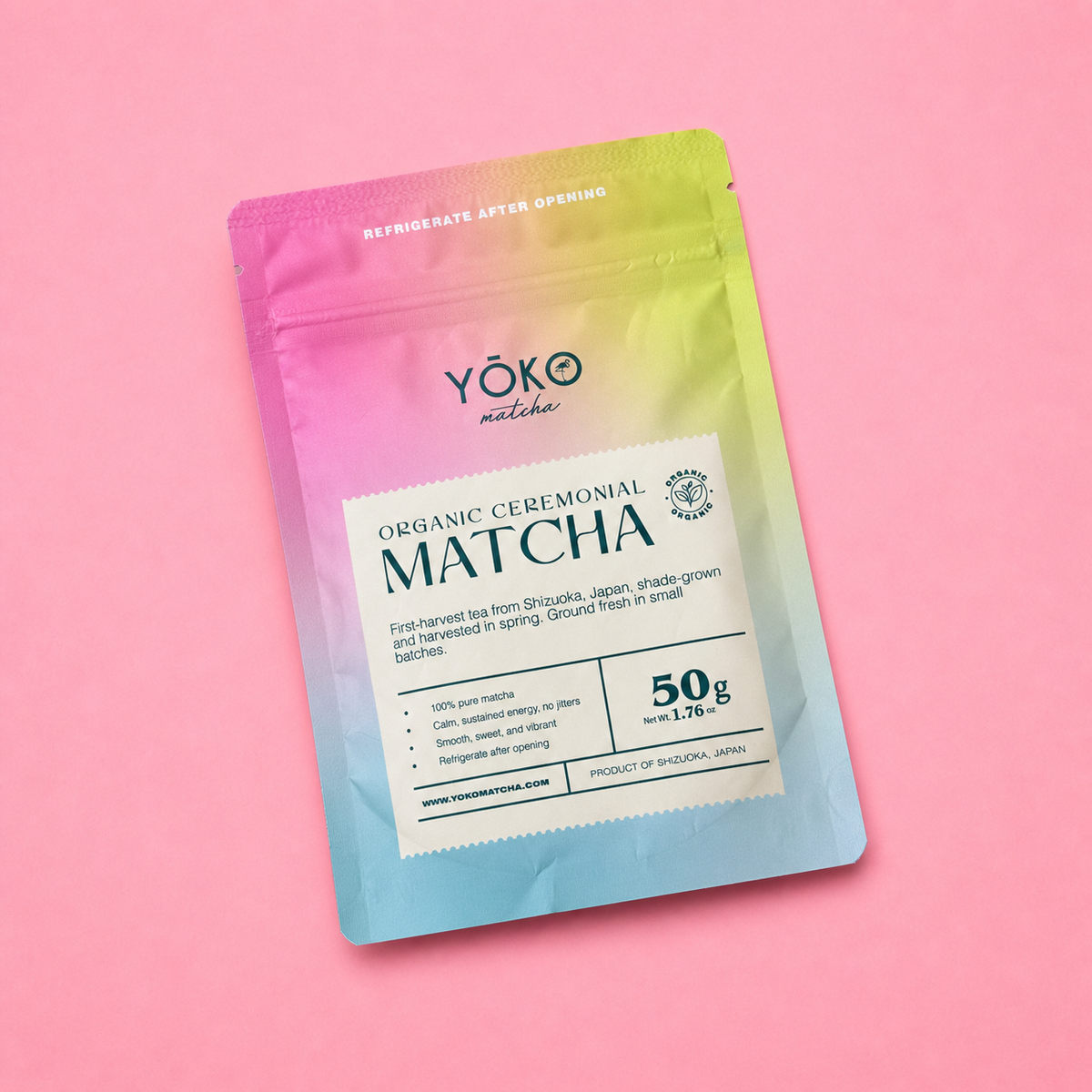
Organic Ceremonial Grade Matcha
25 servings · $1.97 per serving with subscription
Based on 2g per serving.
15 servings · $2.15 per serving with subscription
Based on 2g per serving.
- JAS Organic
- First harvest
- Bead-milled in Japan
In-stock orders ship from Miami next business day.
Shipping calculated at checkout.

MATCHA FOR CAFÉS & HOSPITALITY
Your next menu favorite.
Bring Japanese matcha from Shizuoka to your counter. Shop 500g wholesale bags and cases online—start with one bag, no application needed. Talk to our team about larger orders or custom packaging.
Our 500g ceremonial wholesale matcha is non-organic. In-stock website orders ship from Miami the next business day.
SO MATCHA BENEFITS

Rich in Antioxidants
Matcha is naturally rich in catechins — a family of antioxidants that includes EGCG, the most studied of the group. Because you whisk the whole ground leaf into water instead of steeping and tossing it, you drink everything the leaf has.

Naturally Caffeinated
Matcha naturally contains caffeine and L-theanine. Caffeine content varies with the product and how much matcha you use per serving.

First Harvest, Single Cultivar
Our ceremonial matcha is first-harvest, single-cultivar Yabukita from Hon-Yama, Shizuoka. The tencha is bead-milled in Japan into fine matcha powder.

WHY YŌKO MATCHA TASTES DIFFERENT
Here’s what’s in your bag: first-harvest tencha, single-cultivar Yabukita, grown in Hon-Yama, Shizuoka, and milled in Japan in small cycles. Expect vibrant color, smooth umami, and a clean finish—without added sugar or flavoring.
Made with Yōko Matcha
Watch a few ways to make your next cup.

THE LEGACY
Yōko Matcha is named after Chié’s grandmother, Yōko Dambara, who practiced chadō, the way of tea. Raised by her in Japan, Chié carries that legacy through the brand.
YOUR CUP, YOUR WAY
How to make matcha at home
-
Sift your matcha.
Sift 2g of matcha into a bowl to break up any clumps.
-
Add water and whisk.
Add a little hot—not boiling—water. Whisk in a quick zigzag until smooth and frothy.
-
Make it yours.
Add more water for traditional matcha or your favorite milk for a latte. Enjoy hot or iced, and sweeten to taste.


LEARN MATCHA. MAKE MATCHA.
-

MATCHA 101
EXPLORE MATCHA 101Learn how matcha is grown, graded, prepared, and enjoyed—from your first whisk to a better daily bowl.
-

MATCHA RECIPES
BROWSE MATCHA RECIPESMake café-style matcha at home with tested lattes, seasonal drinks, and simple everyday recipes.


A few good questions
Let's talk matcha.
Straight answers for café owners and matcha drinkers.
Ask us
What is ceremonial grade matcha?
“Ceremonial grade” is a marketing term for matcha intended for drinking, not a standardized Japanese grade. The label alone does not identify the cultivar, origin or harvest. We share those details: our ceremonial matcha is first harvest, single-cultivar Yabukita, grown in Hon-Yama, Shizuoka.
Where does Yōko Matcha's matcha come from?
Yōko Matcha’s ceremonial matcha comes from Hon-Yama, Shizuoka, Japan. It is made from first-harvest, single-cultivar Yabukita grown under shade. The tencha is bead-milled in Japan, and in-stock website orders ship from Miami the next business day.
Can cafés buy wholesale matcha with no minimums?
Yes — cafés are most of what we do. The 500g wholesale bag is $160 (about 166 lattes at 3g per drink), there's no minimum and no application, and in-stock orders ship from Miami the next business day. Standing monthly volume can be reserved from our annual allocation. Start on the wholesale page or browse the Café Resources guides.
How do I order premium Japanese matcha in the US?
Order online — everything ships from our Miami warehouse, next business day for in-stock orders. Home drinkers usually start with the 30g organic ceremonial tin; cafés and heavy whiskers go straight to the 500g bag. We import directly from our partner farm in Shizuoka, so there is no trading layer between the field and your cup.
What makes single-cultivar matcha different?
Single-cultivar matcha is made from one tea cultivar rather than a blend of cultivars. Yōko Matcha’s ceremonial matcha uses Yabukita from Hon-Yama, Shizuoka. Naming the cultivar, origin and harvest gives you specific information about what is in your bag.
Is matcha still in shortage — and can you actually supply my café?
Japan's matcha demand still outruns what farms can grow and mills can grind, which is why prices rose industry-wide. We hold a fixed annual harvest allocation and supply reserved cafés first — here's exactly how our allocation works.


