

Natural energy
The lift comes from caffeine, which increases alertness and reduces sleepiness. How it feels depends on your serving size and your sensitivity to caffeine.
Caffeine explained by EFSAMATCHA 101
A little green, a lot to know. Matcha brings naturally occurring caffeine, tea antioxidants and L-theanine into your cup. Here’s what they mean, what the research says, and how to make matcha your kind of drink.
The green tea leaf, finely milled. Your cup, your way.
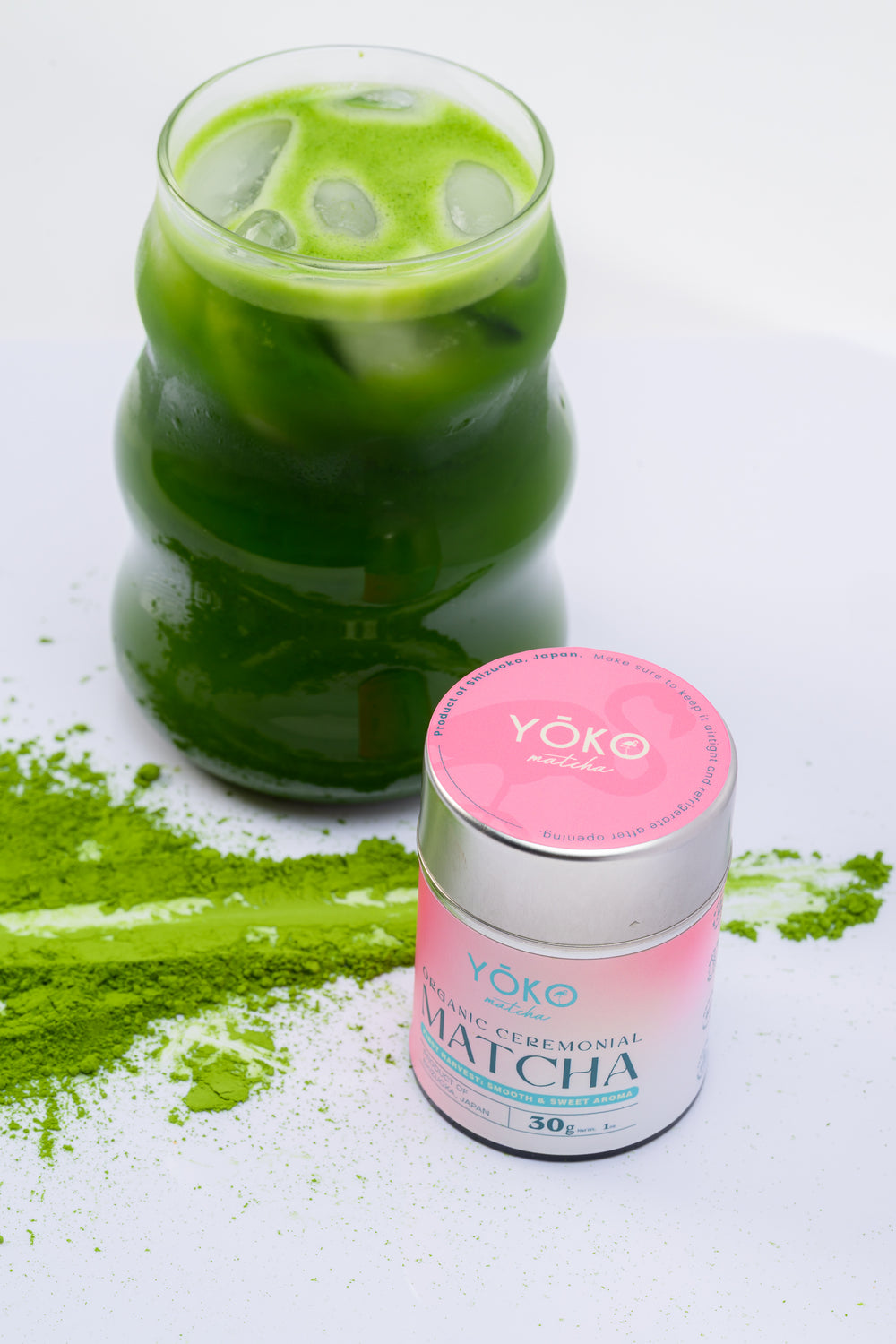
START WITH THE LEAF
Unsweetened matcha can fit into a balanced diet. Its caffeine can help you feel more alert, and the powder contains green tea’s naturally occurring antioxidant compounds. Because you whisk the leaf into your drink, you consume the tea powder itself, rather than only an infusion.
The lift comes from caffeine, which increases alertness and reduces sleepiness. How it feels depends on your serving size and your sensitivity to caffeine.
Caffeine explained by EFSA
Matcha contains catechins, a family of plant compounds that includes EGCG. Researchers measure their antioxidant activity in the lab; that measurement alone does not establish a health outcome in people.
Read the composition study
Pure matcha powder is simply tea. Yōko Matcha’s organic ceremonial matcha has no added sugar, flavoring or fillers. Make it with water, or choose the milk and sweetness you enjoy.
See our organic matcha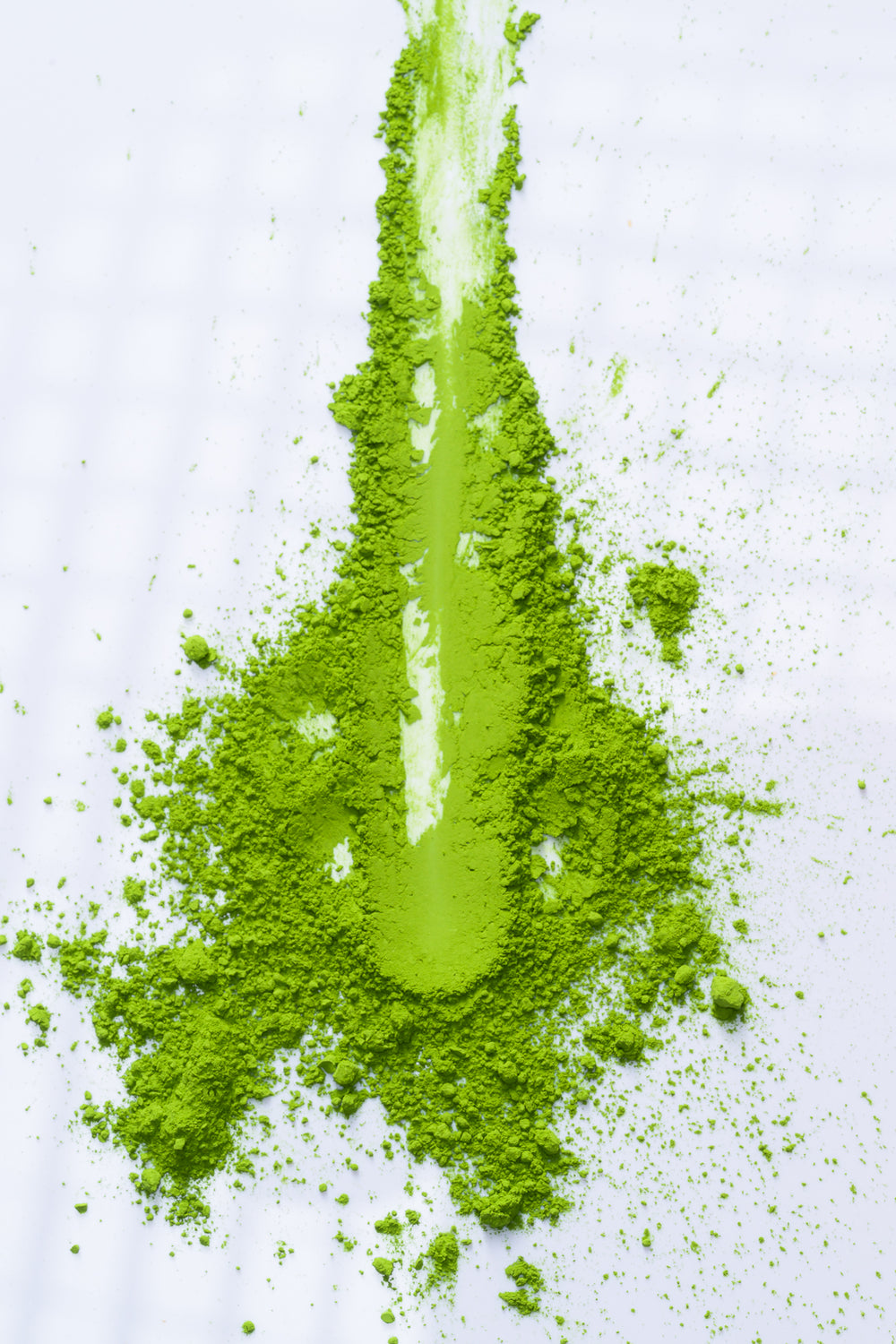
A CLOSER LOOK
L-theanine is an amino acid naturally present in tea. It is studied alongside caffeine because researchers want to understand how the combination affects attention and mood.
In a small 2017 study, 23 people tried matcha drinks or bars containing 4g of powder, as well as placebo versions. Researchers observed improvements in some attention and response-speed tasks, but no significant change in mood.
That is useful early research, rather than a promise that a daily cup improves memory or treats anxiety. The study’s 4g serving also differs from our suggested 2g cup.
KNOW YOUR SERVING
Yes. Matcha naturally contains caffeine. The amount depends on the tea and how much powder you use; adding water or milk changes the drink’s volume, but does not remove the caffeine in the powder.
For Yōko Matcha’s organic ceremonial matcha, our published product figures give approximately these amounts:
caffeine
caffeine · our suggested serving
caffeine
These figures apply to our organic retail matcha, not every matcha or our wholesale grades. The 2g and 3g figures are calculated from 28.4mg per gram. View the product’s nutrition details.
FROM POWDER TO CUP
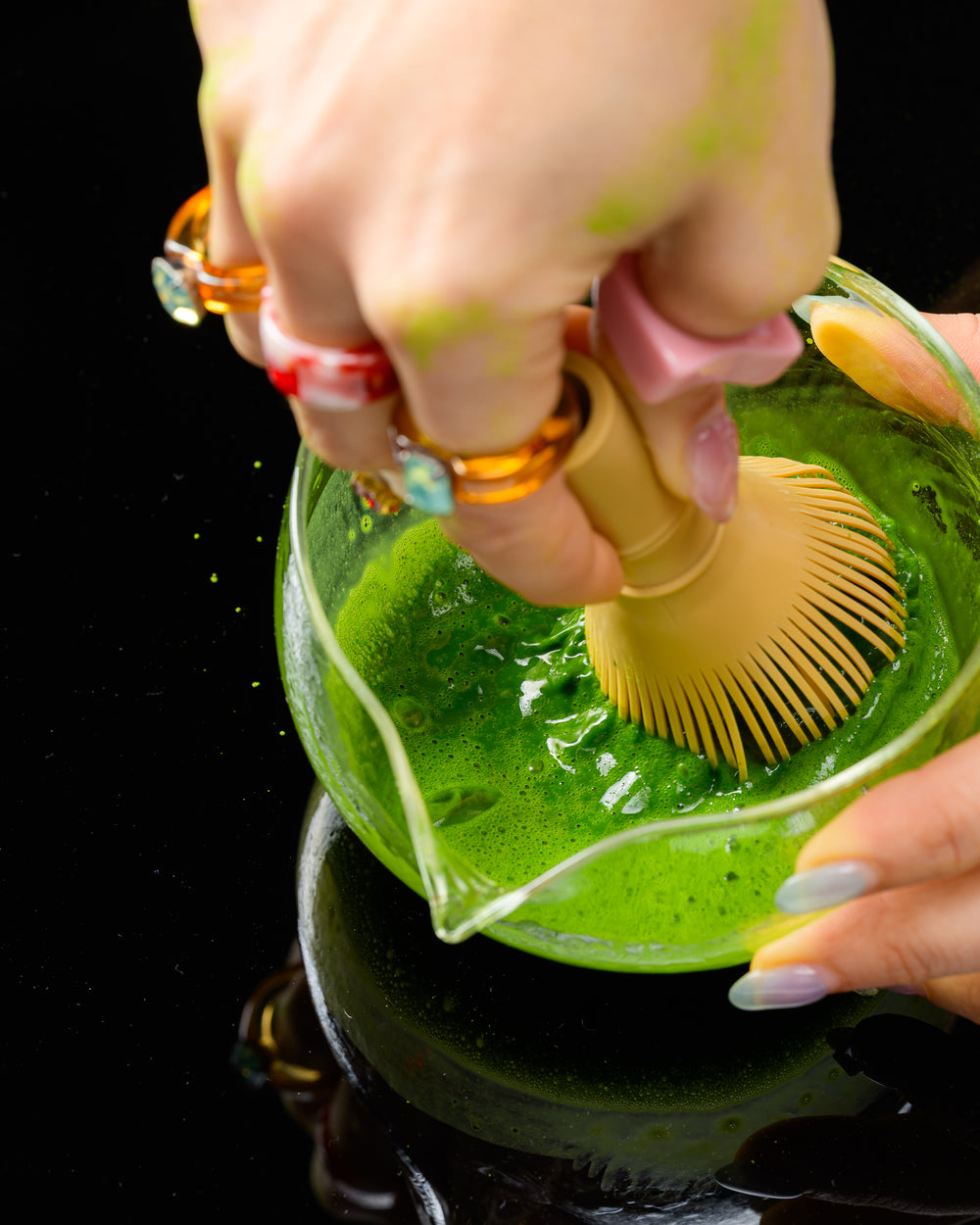
Begin with a measured serving and make it the way you like. Our organic ceremonial matcha is smooth, with umami and natural sweetness. A quick sift helps you get past the clumps. The fancy pour can wait.
Sift 2g of matcha into a bowl. Add 2 oz of hot water at 175°F / 80°C, then whisk in a zigzag motion until smooth and frothy.
Add more water to taste for matcha tea. For an iced matcha latte, pour the whisked matcha over ice and 6–8 oz of your favorite milk.
Taste before adding sweetener. A latte’s sugar and calories depend on its milk, syrups and other ingredients, as well as the matcha.
MAKE ROOM FOR YOUR OWN NEEDS
Count the caffeine in matcha alongside coffee, other tea and energy drinks. The FDA cites 400mg a day as an amount not generally associated with negative effects for most adults. That is a general reference, not a target or a personal allowance.
Choose a serving and time of day that work for you. Caffeine can affect sleep and can cause jitters, anxiety or an upset stomach. If you are pregnant, trying to become pregnant, breastfeeding, taking medication or managing a health condition, ask your healthcare professional about caffeine and tea.
YOUR QUESTIONS, ANSWERED
Matcha is a type of green tea. With matcha, you whisk finely milled leaf into water and consume the powder. With steeped green tea, you usually remove the leaves. Both contain tea compounds; the amounts vary with the tea, serving and preparation.
A matcha latte can fit into a balanced diet. Its ingredients matter: milk contributes its own nutrients, while sweetened mixes and syrups can add sugar. Choose pure matcha powder if you want to control what goes into your cup.
Matcha’s caffeine can help you feel more awake. Morning may be a convenient time to enjoy it if later caffeine affects your sleep. There is no special health benefit established simply from drinking matcha at a particular hour.
Matcha is not a proven weight-loss solution. NCCIH describes possible modest weight effects from green tea catechins and caffeine, with results varying by product and activity. That does not establish weight loss from a daily cup of Yōko Matcha.
Read NCCIH’s evidence summaryIt helps describe the compounds in tea and how they behave under study conditions. Laboratory findings, green tea extract studies and research on brewed tea are different from proving a benefit from a particular serving of matcha. Matcha should not be presented as a way to prevent or treat disease.
YOUR NEXT CUP
First-harvest Yabukita from Hon-Yama, Shizuoka. JAS Organic ceremonial matcha in a 30g tin or 50g bag, with nothing added. Lovely with water, lovely with your favorite milk.
READ A LITTLE FURTHER
Written by Yōko Matcha. Sources checked October 11, 2026. This guide explains tea and published research; it is not individual medical advice.