




NATURAL ENERGY
Feel more awake
Matcha’s natural caffeine helps you feel more alert. A 2g serving of Yōko Matcha contains about 56.8mg caffeine, so you know how much goes into your daily cup.
Smooth umami. Natural sweetness. A clean finish.
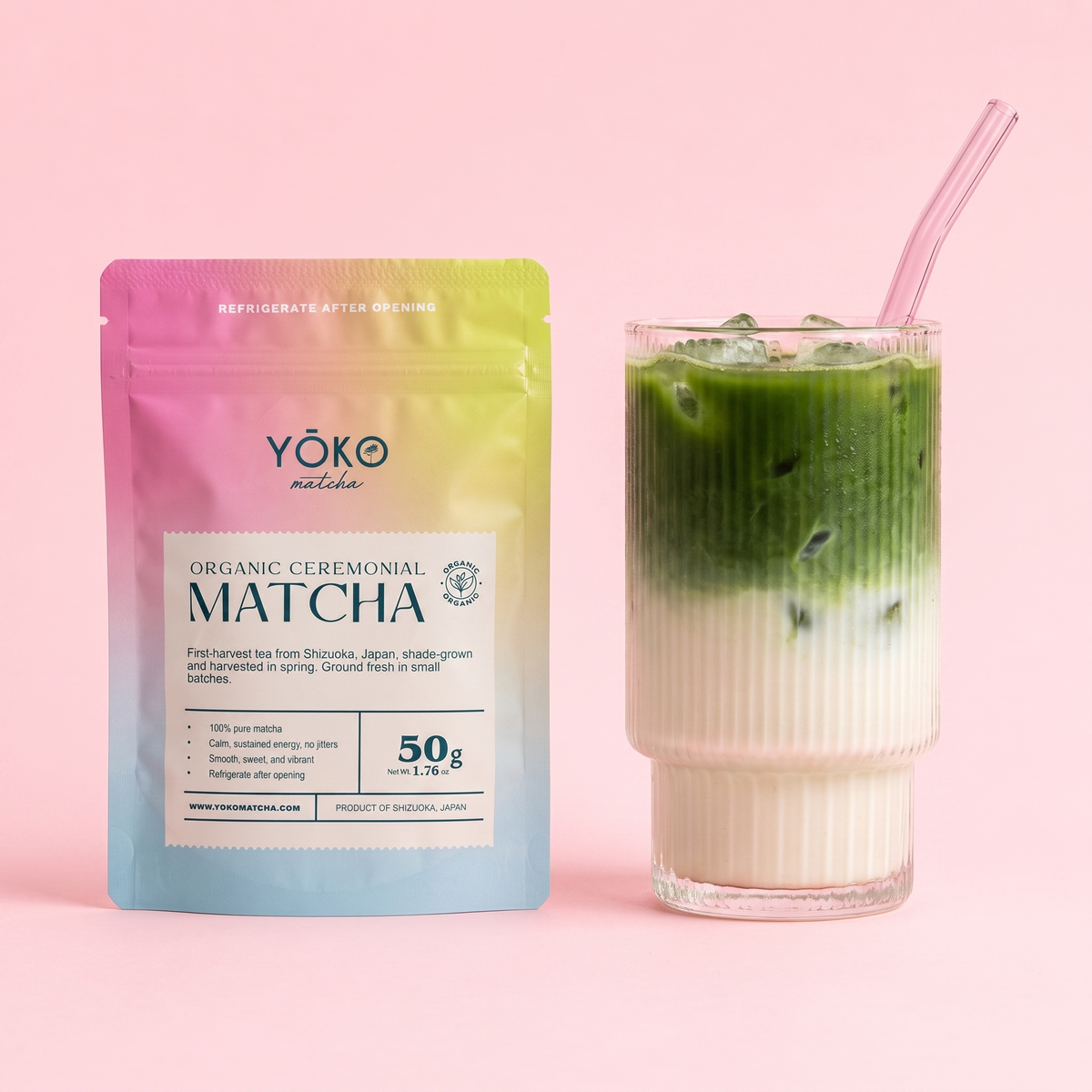
Organic ceremonial matcha from Shizuoka, Japan, for natural energy and a smooth daily cup. Whisk it with water or make your favorite latte. One ingredient. No added sugar or flavoring.
Subscriptions renew at your selected price and frequency. Cancel anytime.
“Very easy to blend, smooth taste and vibrant color.”
Couldn't load pickup availability
In-stock orders ship from Miami next business day. Shipping calculated at checkout.


MATCHA BENEFITS
A morning lift, a smooth cup, and the green tea leaf itself. Here’s what you get with Yōko Matcha.
NATURAL ENERGY
Matcha’s natural caffeine helps you feel more alert. A 2g serving of Yōko Matcha contains about 56.8mg caffeine, so you know how much goes into your daily cup.
SMOOTH TASTE. ZERO ADDED SUGAR.
Smooth umami, natural sweetness, and a clean finish. Enjoy our first-harvest matcha with water or your favorite milk, with no sugar, flavoring or fillers added to the powder.
THE WHOLE TEA LEAF
With matcha, you drink the finely ground leaf itself. That brings green tea’s naturally occurring antioxidant compounds into your cup, including 212mg catechins per 2g serving.
15 cups. One ingredient. Each 30g tin makes about 15 servings at 2g per cup. JAS Organic, first-harvest Japanese matcha, ready for the way you like to drink it.
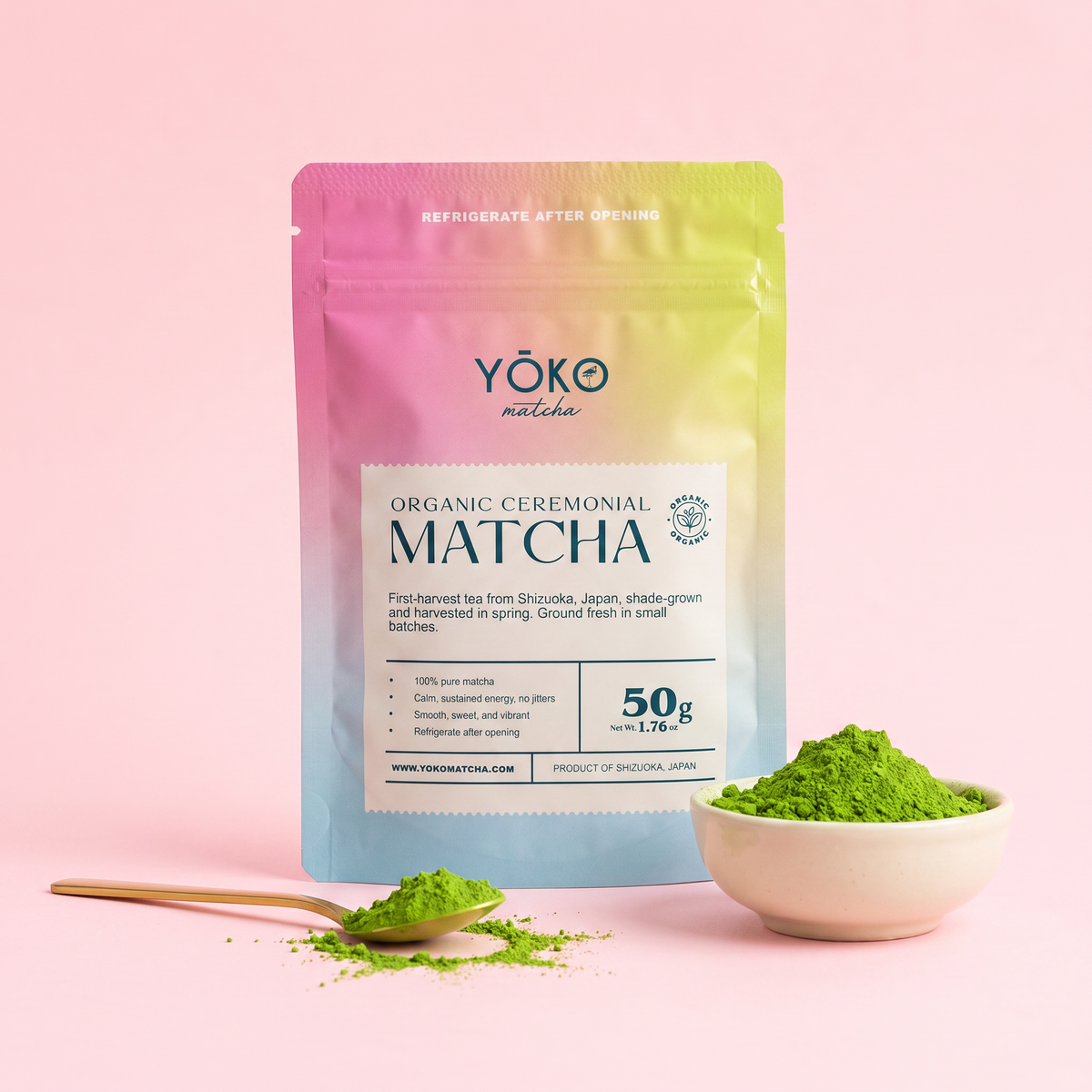
25 cups. One ingredient. Each 50g pouch makes about 25 servings at 2g per cup. JAS Organic, first-harvest Japanese matcha, ready for the way you like to drink it.
JAS OrganicCaffeine’s alertness effect is described by EFSA. A 27-person crossover study tested 50mg caffeine with 100mg L-theanine and found improvements on selected attention tasks. It did not test Yōko Matcha.
A separate 23-person matcha study used 4g of powder and found small improvements on some attention measures, with no significant mood change. That is twice our suggested 2g serving and a different matcha. The studies do not establish an equivalent effect from our product.
The serving figures on this page are calculated from our per-gram nutrition facts. Natural levels can vary. A 2g serving supplies about 56.8mg caffeine and 30mg L-theanine; it does not match the 50mg/100mg study combination. For an explanation of how antioxidants work, see the National Cancer Institute. For a broader view of evidence and safety, see NIH’s green-tea overview.
WHY CHOOSE YŌKO MATCHA?
Your daily matcha comes directly from an award-winning, family-owned Japanese tea producer. Three generations of expertise, with quality control from growing the leaf to testing the finished matcha.


KNOW WHAT IS IN YOUR MATCHA
JAS Organic ceremonial matcha from Hon-Yama, Shizuoka. One ingredient, a clear source, and the details behind your daily cup.
| Origin | Hon-Yama, Shizuoka, Japan |
|---|---|
| Cultivar | Yabukita |
| Harvest | First harvest; 50g pouch: 2026 harvest |
| Growing method | Shade-grown |
| Milling | Bead-milled in Japan |
| Taste | Smooth umami, natural sweetness, clean finish |
| Certification | Certified JAS Organic |
| Additives | None |
| Best for | Water or matcha latte |
WHAT ONE GRAM DELIVERS
Our suggested serving is 2g. The figures below are per 1g of matcha powder.
| Calories | 3 kcal |
|---|---|
| Total fat | 0g |
| Sugar | 0g |
| Caffeine | 28.4mg |
| Catechins | 106mg (10.6%) |
| L-Theanine | 15mg |
| Polyphenols | ~100–120mg |
| Tannins | 94mg (9.4%) |
HOW TO PREPARE MATCHA
Both drinks start the same way: one 2g serving, water at 175°F / 80°C — hot enough to whisk easily, never boiling.
YOUR QUESTIONS, ANSWERED
Straight answers about matcha benefits, caffeine, ingredients, and making your daily cup.
Yōko Matcha is JAS Organic ceremonial-grade green tea powder from Hon-Yama, Shizuoka, Japan. It is made from shade-grown, first-harvest Yabukita leaves for smooth umami, natural sweetness and a clean finish. Enjoy it with water or as a matcha latte.
Yōko Matcha sources directly from an award-winning, family-owned Japanese tea producer with three generations of expertise dating to 1948. Cultivation, processing, milling and testing are connected within one production system, giving you a clear source and quality checks from leaf to finished matcha.
Matcha provides natural caffeine to support alertness, along with the antioxidant compounds found in green tea. Yōko Matcha combines those naturally occurring ingredients with a smooth, naturally sweet taste and no added sugar, flavoring or fillers. A suggested 2g serving contains about 56.8mg caffeine.
Yes. Matcha contains caffeine, which helps increase alertness and reduce sleepiness. Yōko Matcha also contains L-theanine, an amino acid studied with caffeine for attention. The research uses specific doses; it does not establish the same effect for every cup. Read the ingredient research above for the study details.
A suggested 2g serving of Yōko Matcha contains about 56.8mg caffeine, based on 28.4mg per gram in our nutrition facts. Using more powder increases the caffeine in your cup; adding milk or water does not remove it. Natural levels can vary.
Yes, if you want a different caffeinated drink. Yōko Matcha has a smooth, umami-rich taste and makes a hot or iced latte. A 2g serving contains about 56.8mg caffeine. Compare that with your usual coffee serving and adjust to your caffeine sensitivity; matcha is not caffeine-free.
Antioxidants are compounds that can neutralize unstable molecules called free radicals. Green tea contains antioxidant compounds called catechins, including EGCG. A 2g serving of Yōko Matcha provides about 212mg total catechins from the ground tea leaf; that figure is not an EGCG-only measurement.
Matcha can be part of a daily routine. Start with our suggested 2g serving and choose the amount and timing that suit your caffeine sensitivity. Count caffeine from other drinks too. If you are pregnant, breastfeeding or have medication-related questions, discuss caffeine intake with your clinician.
No. Yōko Matcha has one ingredient: organic Japanese matcha green-tea powder. It has natural sweetness in its taste, with no added sugar, flavoring or fillers. Any sugar in your finished latte comes from the milk or sweetener you choose.
One 50g pouch makes about 25 cups at our suggested 2g serving. You can adjust the amount for a lighter or stronger drink; using more powder means fewer servings per pouch.
Yōko Matcha’s organic ceremonial matcha is grown in Hon-Yama, Shizuoka, Japan. We source directly from our Japanese producer, with cultivation, processing, milling and testing connected within its production system.
First-harvest matcha is made from tea leaves picked during the first harvest of the growing season. Yōko Matcha uses shade-grown, first-harvest Yabukita leaves. The 50g pouch offered here is from the 2026 harvest.
Yes. Yōko Matcha’s organic ceremonial matcha is certified JAS Organic. JAS refers to the Japanese Agricultural Standards. This certification applies to the organic ceremonial matcha offered here in 30g and 50g sizes.
Our Japanese producer screens for more than 200 pesticide residues as part of its quality checks. Lot-specific documentation is available on request, so you can ask about the matcha you are buying.
Yōko Matcha’s organic ceremonial matcha is made from a single cultivar: Yabukita. Its taste is smooth and umami-rich, with natural sweetness and a clean finish.
Yōko Matcha is bead-milled in Japan into a fine powder. It is made from tencha: tea leaves that are shaded before harvest, then steamed and dried without rolling before milling.
Sift 2g of matcha into a bowl, add 2 oz of water at about 175°F / 80°C, and whisk until frothy. Add more water to taste, or pour over 6–8 oz of milk for a latte. The preparation guide above shows both methods.
After opening, refrigerate Yōko Matcha according to the package directions. Keep it tightly sealed in an opaque, airtight container, away from moisture, heat and strong odors.
Choose Subscribe & Save for 15% off, then select delivery every month, every five weeks or every two months. Your subscription renews at the selected price and frequency. You can manage or cancel it through your account.